
What a Skipped Fall Inspection Actually Costs You
Skip garage door prep this fall and the bill usually comes due at the worst possible moment: a spring snapping during a December cold snap, a door that won't budge before a morning commute, or an opener that quietly dies the week you need it most. After a summer of afternoon downpours and thick Alabama humidity, your garage door hardware has already been working overtime. Ignore it through another season and small problems compound — a little rust becomes a seized roller, a little swelling becomes a door that binds in the track, and a minor opener glitch becomes a dead unit on the coldest morning of the year.
Why This Transition Is Hard on Garage Doors in This Area
Morgan County doesn't get a gentle slide from summer to winter. It gets humid storm season, then a swing into cold mornings and frosty nights, often within a matter of weeks. That whiplash is tough on garage door systems for a few specific reasons:
- Wood and composite panels swell during months of high humidity and heavy rain, then shrink and crack as temperatures drop and the air dries out.
- Steel hardware rusts after repeated exposure to moisture from storms and standing humidity, especially on springs, hinges, and track bolts that don't get wiped down.
- Lubricant thickens or washes away — summer humidity breaks down cheap lubricants, and once cold weather hits, anything left on the tracks and rollers gets stiff and sluggish.
- Wind-load stress adds up. Doors built or reinforced for storm season take a beating from gusts and pressure changes; by fall, hardware that absorbed that stress needs a real inspection, not just a glance.
Symptoms Worth Taking Seriously Right Now
Walk out to your garage and actually test the door before winter, not just open and close it out of habit. Watch and listen for:
- Grinding, popping, or scraping sounds when the door moves — often a sign of rust buildup on rollers or hinges from the wet season.
- A door that looks slightly crooked when open, or panels that no longer sit flush — classic signs of humidity-related swelling or warping.
- Visible rust spots on the springs, especially near the coils where moisture collects and sits.
- The door reversing unexpectedly or struggling partway through its cycle — a sign the opener is compensating for extra resistance somewhere in the system.
- Gaps at the bottom or sides where you can see daylight — these let cold air in all winter and are usually a weatherstripping problem, not a door problem.
A Practical Fall Maintenance Checklist
Most of this is manageable in an afternoon, and it's worth doing before the first hard freeze rather than after.
- Wipe down and inspect the springs and hardware. Remove surface rust with a wire brush where it's safe to reach, and note any spring that looks pitted, stretched, or discolored. Springs under tension are not a DIY repair — if a spring looks compromised, that's a call-in-the-pros situation, not a weekend project.
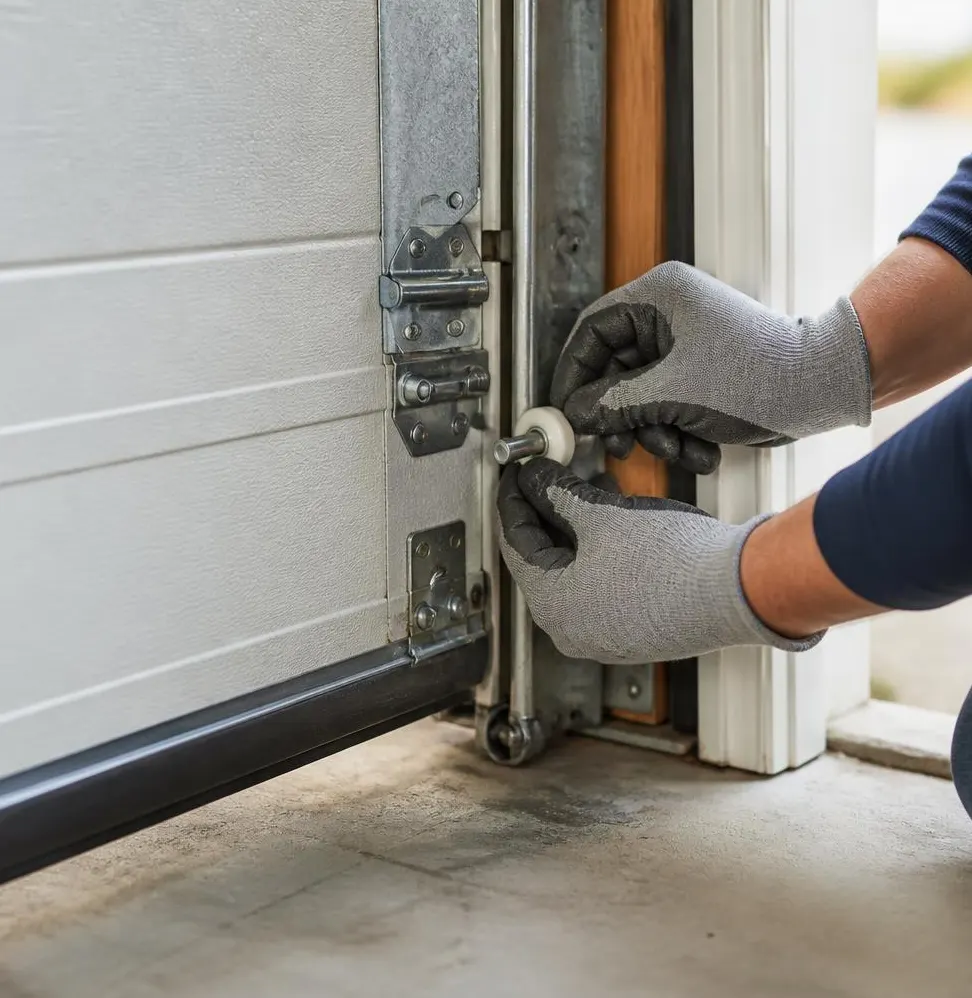
- Lubricate moving parts with a silicone-based garage door lubricant, not household oil or WD-40, which attracts dust and grit. Hit the rollers, hinges, and track — not the opener chain or belt unless the manufacturer specifically says to.
- Check and replace worn weatherstripping along the bottom seal and sides. A humid summer often leaves this material brittle or compressed; fresh weatherstripping cuts down on cold drafts and keeps moisture from pooling under the door.
- Test the balance. Disconnect the opener, lift the door halfway by hand, and let go. It should hold its position. If it drifts up or crashes down, the springs are out of balance — a sign of wear that tends to show up after a stressful storm season.
- Inspect panels for swelling or small cracks from humidity cycling, especially near seams and the bottom panel where moisture collects most.
- Check the opener's battery backup if you have one. Cold weather is hard on batteries, and a backup that worked fine in July can fail by January. Replace it now rather than finding out during a winter power outage.
The Trade-Off Homeowners Often Miss
It's tempting to treat weatherstripping and lubrication as cosmetic, but they directly affect energy loss and moisture control. A gapped seal doesn't just let in cold air — it lets in the same moisture that caused the rust and swelling you're trying to fix in the first place. Spending a little now on sealing and lubrication reduces the odds you'll be dealing with a rusted spring or a warped panel again next fall.
When to Call Falkville Garage Door
If you find a damaged spring, a door that's noticeably out of balance, or an opener that's struggling or unresponsive, that's where professional help makes sense. Falkville Garage Door handles spring replacement safely, with the right tools and tension equipment, and offers full garage door maintenance visits that cover everything from rust treatment to track alignment and opener diagnostics — the kind of thorough check that's hard to do completely on your own. If your door has been fighting you all storm season, it's worth having it looked at before the real cold sets in rather than after something fails.
Falkville Garage Door proudly serves homeowners in Falkville, Hartselle, Decatur, Cullman, Somerville, Priceville, Eva, and Lacon. If your garage door needs attention before winter, call Falkville Garage Door today and get it handled right.